

Terms and Conditions
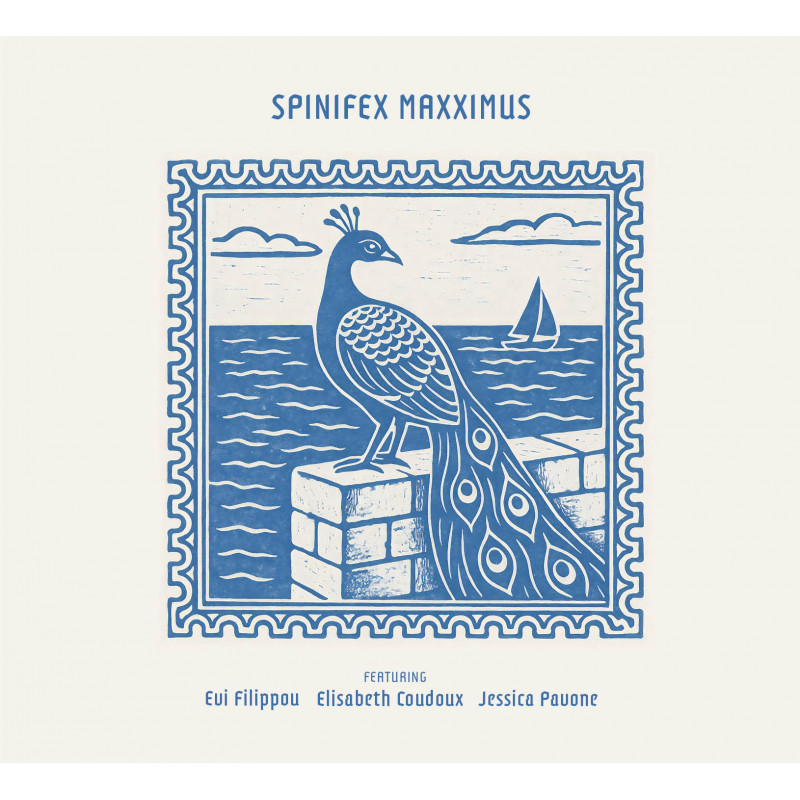
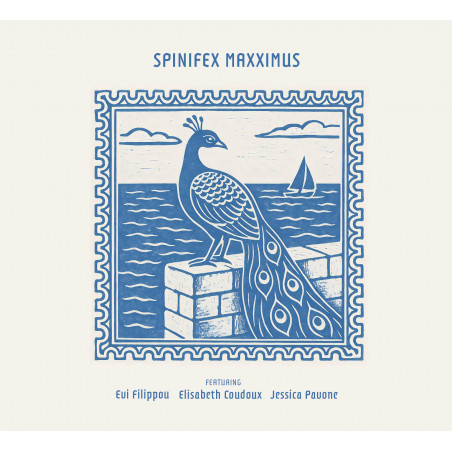
Maxximus, out November 14, 2025 via Trytone Records, finds the core band - saxophonist/artistic director Tobias Klein, trumpeter Bart Maris, saxophonist John Dikeman, guitarist Jasper Stadhouders, bassist Gonçalo Almeida and drummer Philipp Moser – joined by vibraphonist Evi Filippou, cellist Elisabeth Coudoux and violist Jessica Pavone.
“For nearly two decades, [Spinifex] have forged original music from seemingly incompatible elements—mathematical structures, punk aggression, free jazz fire.” – Lawrence Peryer, All About Jazz
“[Spinifex] continue to push boundaries, crafting a compelling combination of meticulous complexity and primal energy, captivating both the intellect and the senses.” – Tim Larsen, Jazz Views
Tour Dates in 2025 • Nov, 27 Parzelle im Depot, Dortmund (DE) • Nov. 28 LantarenVenster, Rotterdam
• Nov. 29 HotHouse, Leiden • Dec. 3 JIN, Nijmegen
• Dec. 5 Zaal 100, Amsterdam • Dec. 6 Plusetage, Baarle-Nassau
With such a volatile concoction of propulsive energy, full-throttle dynamics and ferocious abandon as the default setting, how does a band like Spinifex ramp things up to a level fit for such a landmark anniversary? Expanding the ensemble is one option, as implied by the title of the group’s celebratory new release, Maxximus, which bolsters the line-up with three deftly chosen special guests. But Spinifex– in characteristically unpredictable fashion – has also opted to subvert expectations by… taking a quieter approach?
Well, relatively speaking. For Maxximus, out November 14, 2025 from Trytone Records, the six members of Spinifex maintain their trademark vigor but supplement their regular arsenal of instruments with an array of acoustic and less-amplified alternatives: trumpeter Bart Maris adds piccolo trumpet; alto saxophonist and artistic director Tobias Klein wields bass clarinet; tenor saxophonist John Dikeman delves into the bass saxophone; Jasper Stadhouders switches from electric to acoustic guitar and Gonçalo Almeida from electric to double bass; and Philipp Moser augments his drum kit with a range of percussion.
The ability to steer this free jazz and punk rock fueled vessel into more chamber music-inspired waters is also augmented by the three additions to this audaciously muted session: Berlin-based Greek vibraphonist and percussionist Evi Filippou (Elias Stemeseder, Angelika Niescier), German cellist Elisabeth Coudoux (Tomeka Reid, Steve Swell), and New York-based violist Jessica Pavone (Anthony Braxton, Mary Halvorson).
“We wanted to approach this project with a different concept of our sound,” Klein explains. “Opening more space to acoustic rather than amplified sound would allow us to use a few colors that band members have used in their music individually, but not in the context of Spinifex. Thinking further, we thought about players that would enable us to present different colors and different dynamics.”
The altered direction is made clear from the opening moments of the album, which begins with that rarest of species – a Spinifex ballad. Stadhouders’ “Smitten” disorients with its slow, portentous melody, luxuriating in the expanded palette of harmonics that the reconfigured ensemble can achieve. The unison tones unravel into an intertwining group improvisation until the tension can no longer be contained and Moser erupts with a breakneck rhythm at the midway point, the velocity gradually slowing again and making the piece a kind of musical palindrome.
For Klein, the challenge was to reconfigure Spinifex’s usual aggressive grooves using these less frictional colors. His solution is “Sack & Ash,” which thrives on intricate layers of detail even as it hurtles forward relentlessly. Klein also contributed “Phoenix,” which continually evolves while leaving boundless space for improvisation. “I wanted this piece to have a long arc of tension while still giving a lot of freedom to explore the strong points in the players’ improvisation abilities,” he explains.
Coudoux is the sole guest musician who also contributes a piece to the album. “Springend” proved an enticing challenge unfamiliar in the Spinifex book, where the player/composers know each other’s playing intimately and have communally forged an identifiable sound incorporating each member’s distinct individual voice. “In some ways Elisabeth’s piece leans towards Spinifex’s music,” Klein says, “and in some ways it doesn’t – and I really like that. It shakes up the habits of the players quite a bit, and it even gives a different role to the other guest musicians because it was something new for all of us. I'm thrilled with how it turned out.”
Maris’ “Annie Golden,” which builds incrementally from sparse textures to a raucous climax, pays tribute to the singer of the late-70s American punk band The Shirts, who later became an actress whose credits include Desperately Seeking Susan, 12 Monkeys, Miami Vice and Orange is the New Black. The album concludes with Almeida’s “The Privilege of Playing the Wrong Notes,” which – in addition to offering a wry mission statement for the band, and perhaps for adventurous jazz as a whole – transplants the bassist’s work in the electro-acoustic realm into a wholly acoustic setting, with mesmerizing results.
With two decades now under their collective belts, Maxximus makes clear that the spirit of exploration and deconstruction that lends its music such a combustive edge also drives the direction of the band itself. The album’s sound is utterly, recognizably Spinifex, while also expanding the boundaries of what that implies. As Klein himself puts it, “I normally see Spinifex as a compact ball that rolls with a definite momentum. With Maxximus we fan out a bit. I really enjoyed going back and forth between the rolling and the fanning out.”
Amsterdam-based Spinifex, named after a tough Australian species of grass, has spent “20 years as one of Europe’s foremost improvising groups” (DownBeat). The band’s volatile sound is a combination of free improv, punk rock and other typically Western contemporary music, with a blend of disparate influences culled by the band members’ wide-ranging backgrounds. Drummer and astrophysicist Philipp Moser is known for his work with Dutch progressive metal band Cilice. Guitarist Jasper Stadhouders was a member of Ken Vandermark's group Made To Break and leads his own Polyband. The Portuguese-born, Rotterdam-based bassist Gonçalo Almeida switches effortlessly between a beautifully rounded sound and heavy electric distortion. Tenor saxophonist John Dikeman has been impressing audiences performing with his trio with William Parker and Hamid Drake, as well as with Universal Indians/Joe McPhee. Flemish trumpet master Bart Maris has become one of the most prominent and original voices in European progressive jazz. Alto saxophonist Tobias Klein, the motor behind the band, has also made a name for himself as a bass clarinet player and composer.
You might also like